Ebid Toy
1 / 5
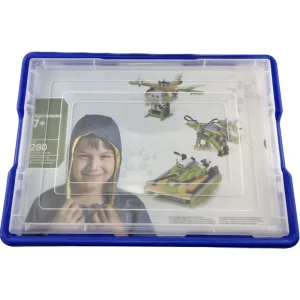
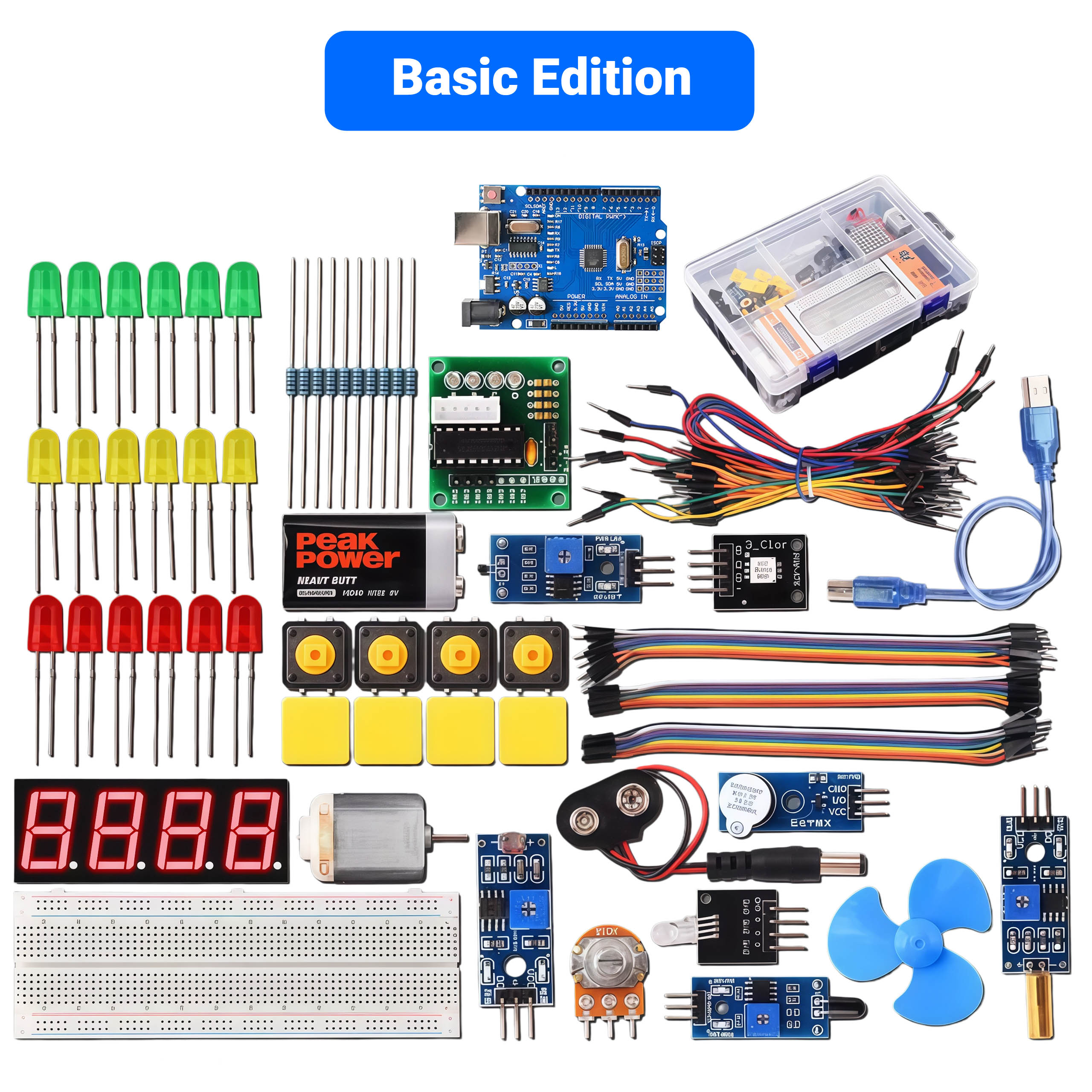
For absolute beginners – learn LEDs, sensors, and basic circuits.
Adds more components like motors and displays for school projects.
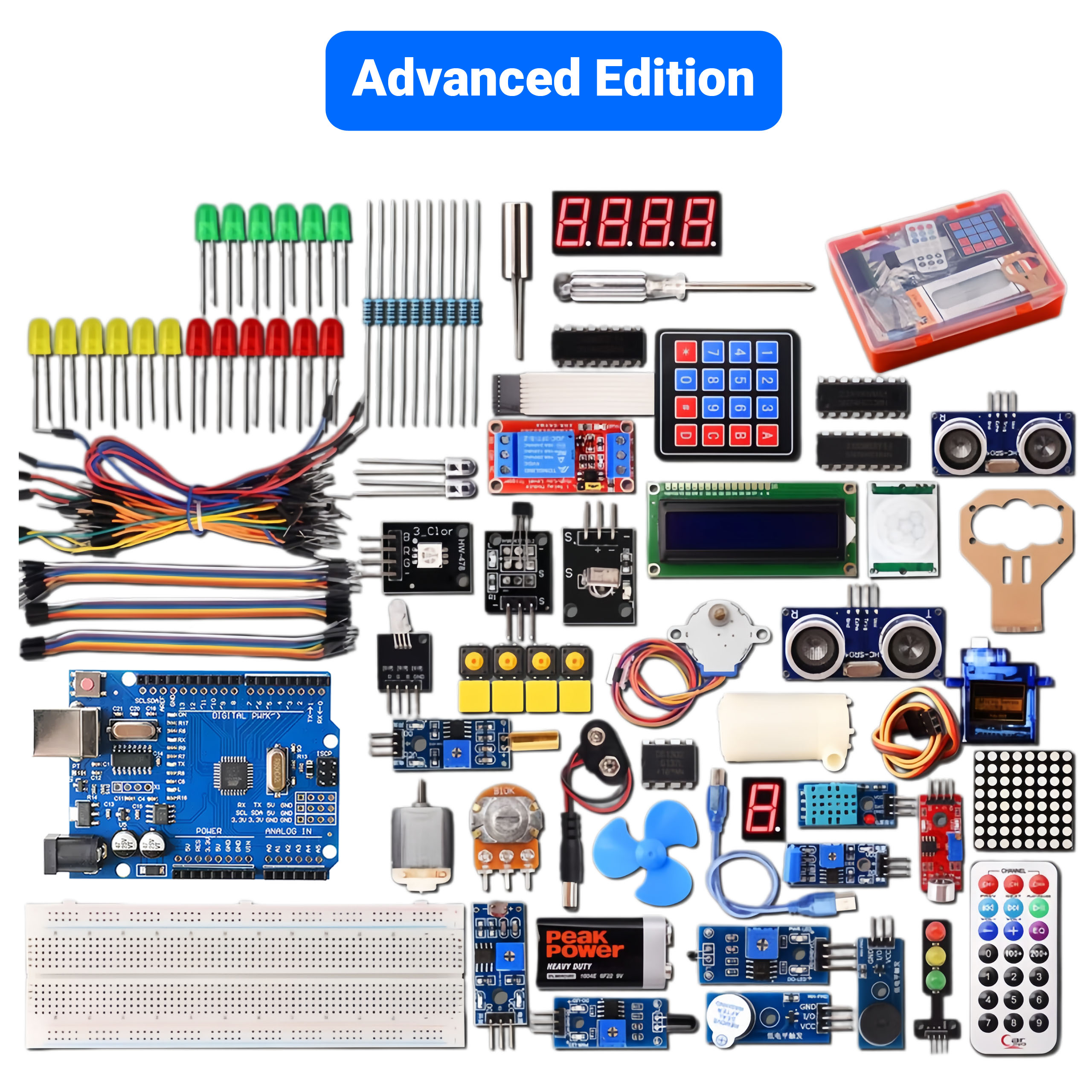
Introduces modules like Bluetooth, ultrasonic, and LCD for intermediate makers.
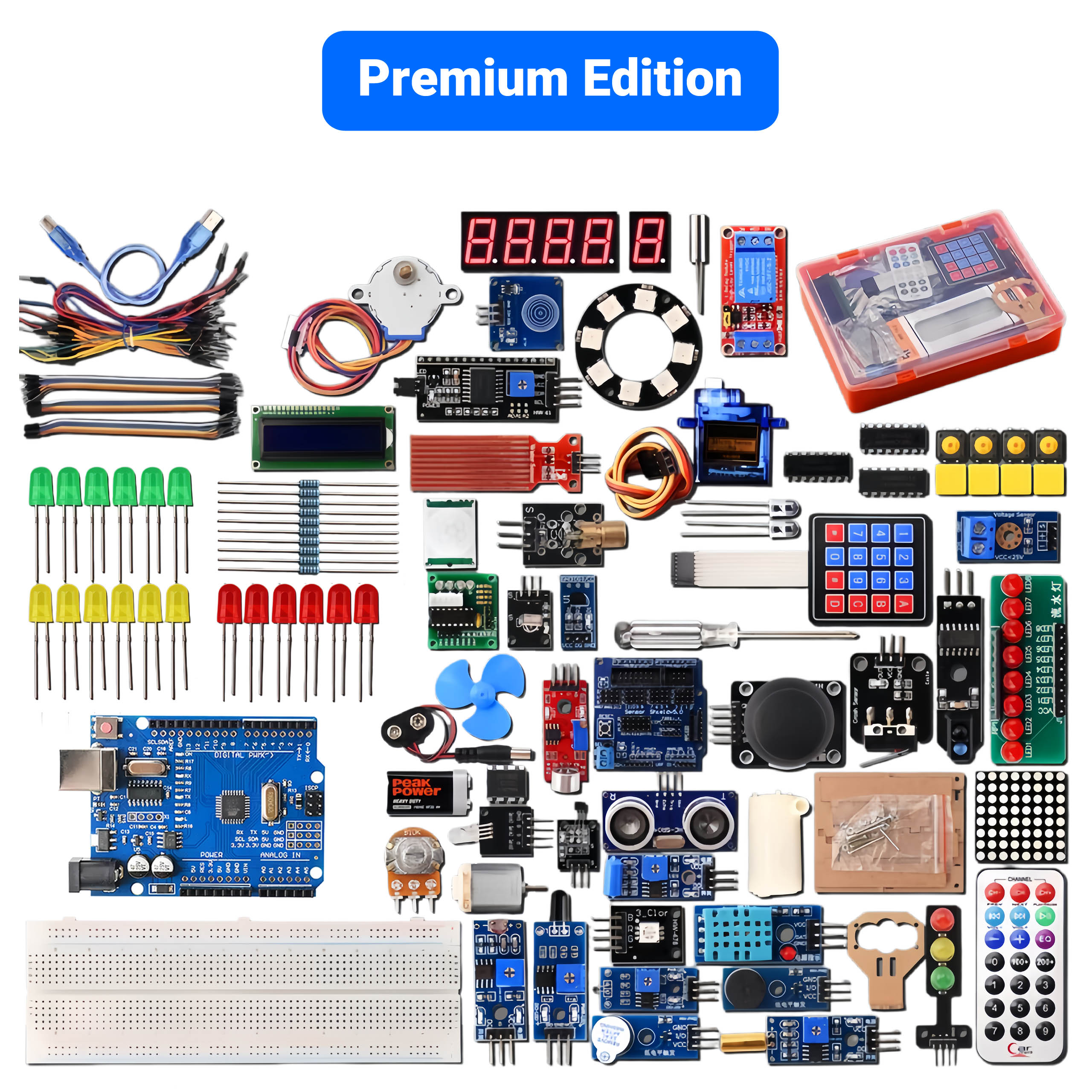
Includes IoT modules, joystick, and multiple sensors for complex builds.
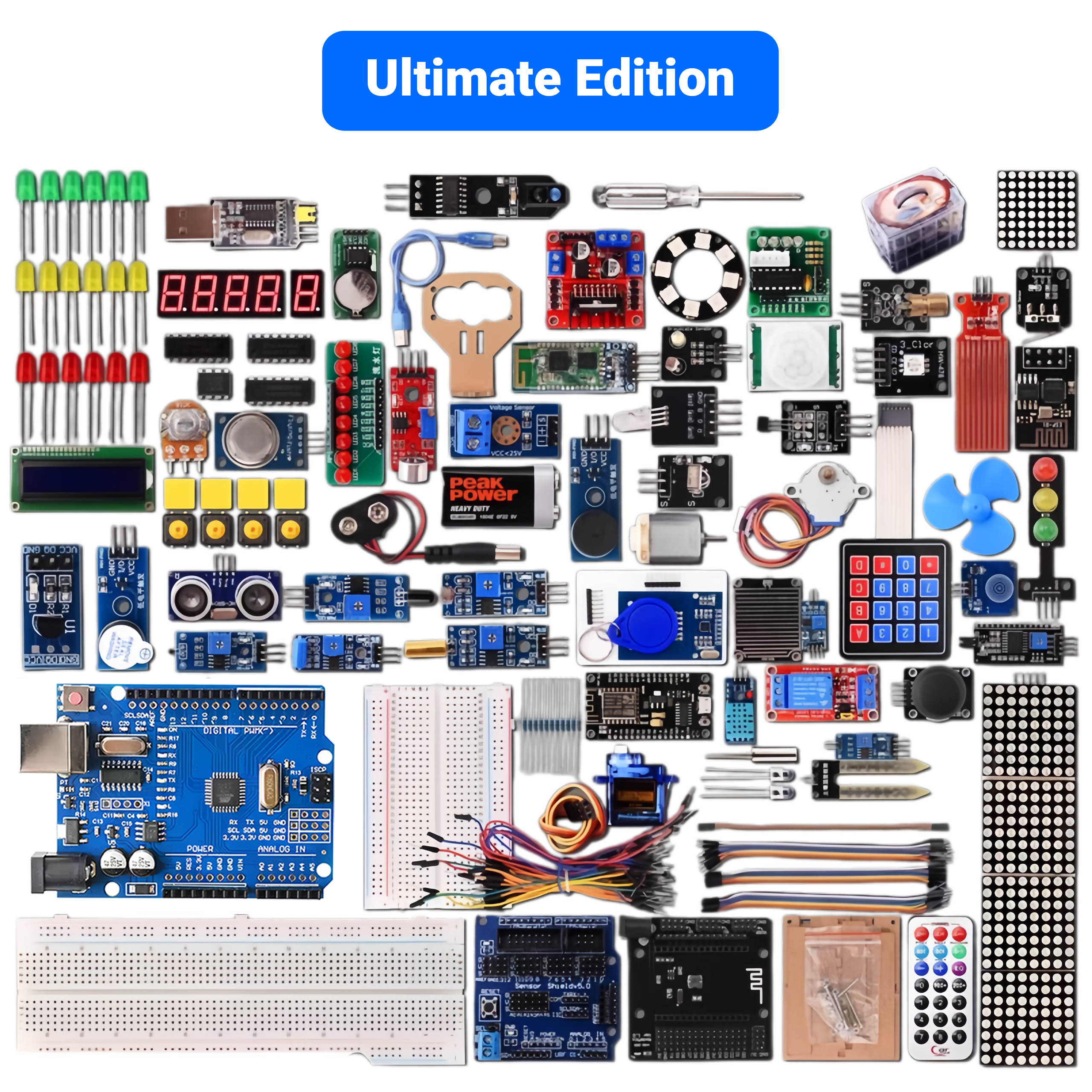
Full suite with servo, pump, RF, and all components for robotics and smart home systems.
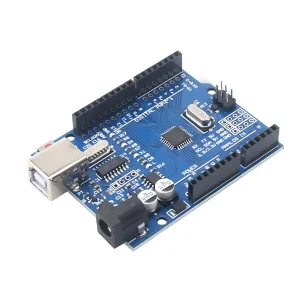
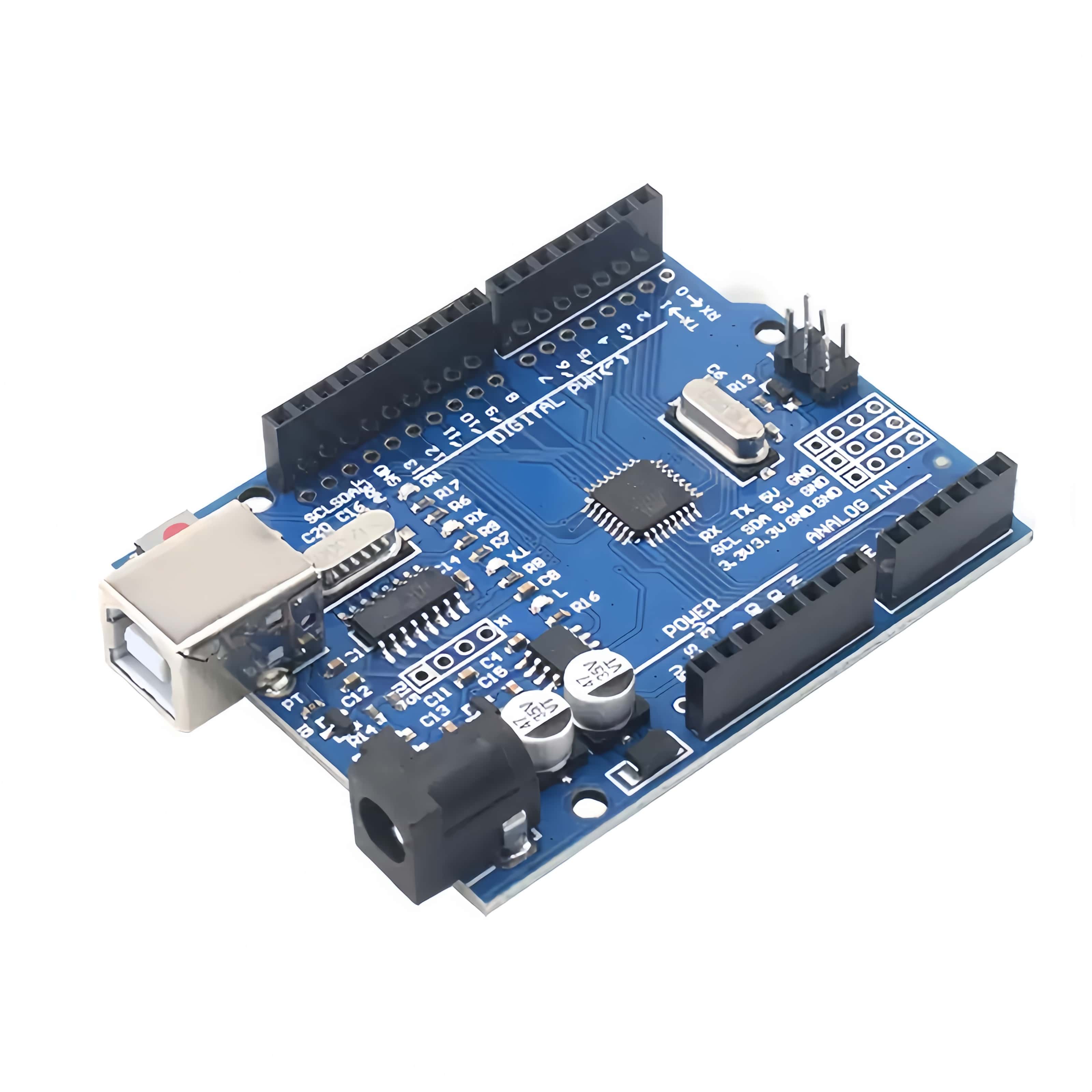
| Parameter Specifications | |
|---|---|
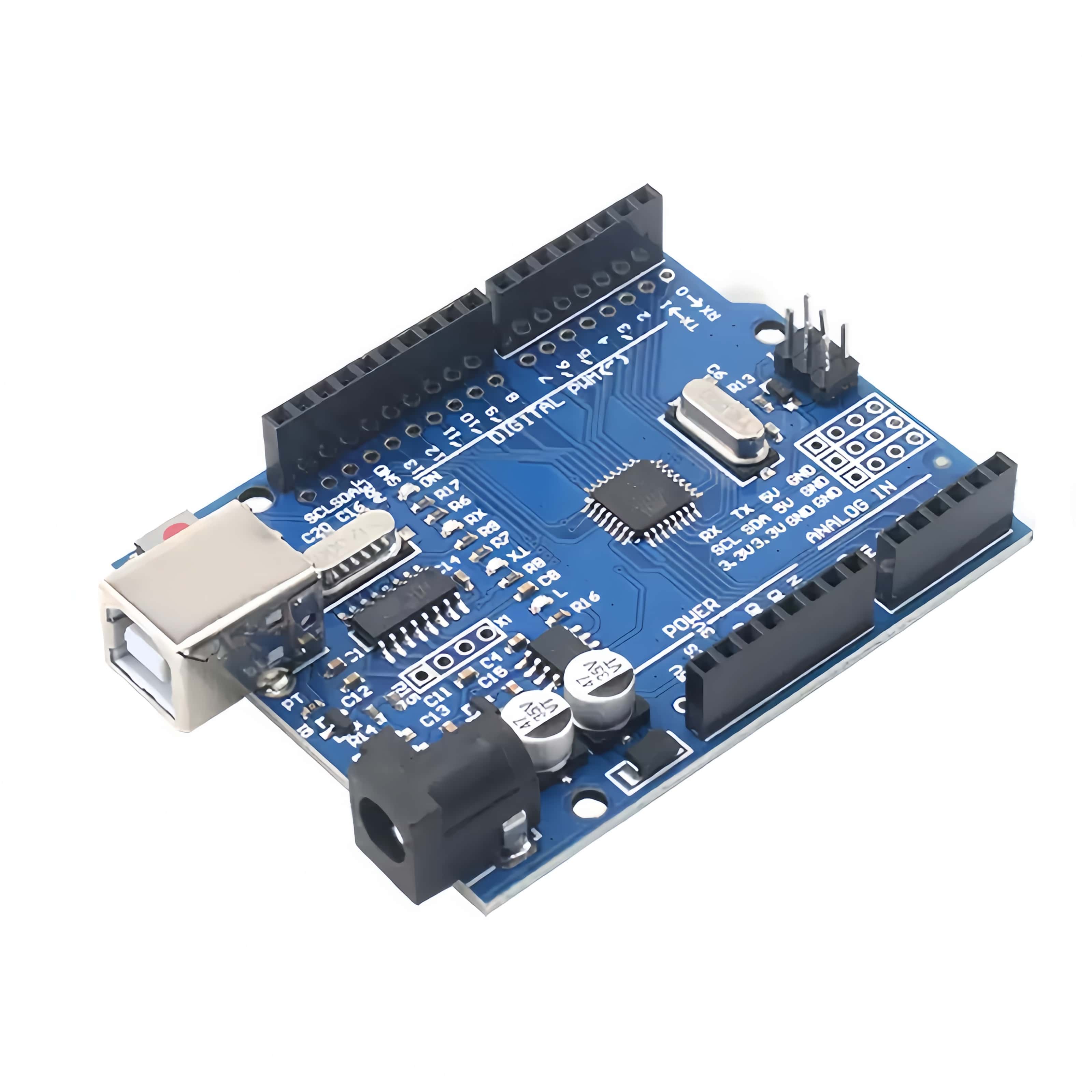
| Microcontroller | ATmega328P |
| Operating Voltage | 5V |
| Input Voltage (recommended) | 7-12V |
| Input Voltage (limit) | 6-20V |
| Digital I/O Pins | 14 (of which 6 provide PWM output) |
| PWM Digital I/O Pins | 6 |
| Analog Input Pins | 6 |
| DC Current per I/O Pin | 20 mA |
| DC Current for 3.3V Pin | 50 mA |
| Flash Memory | 32 KB (ATmega328P) of which 0.5 KB used by bootloader |
| SRAM | 2 KB (ATmega328P) |
| EEPROM | 1 KB (ATmega328P) |
| Clock Speed | 16 MHz |
| LED_BUILTIN | 13 |
| Length | 68.6 mm |
| Width | 53.4 mm |
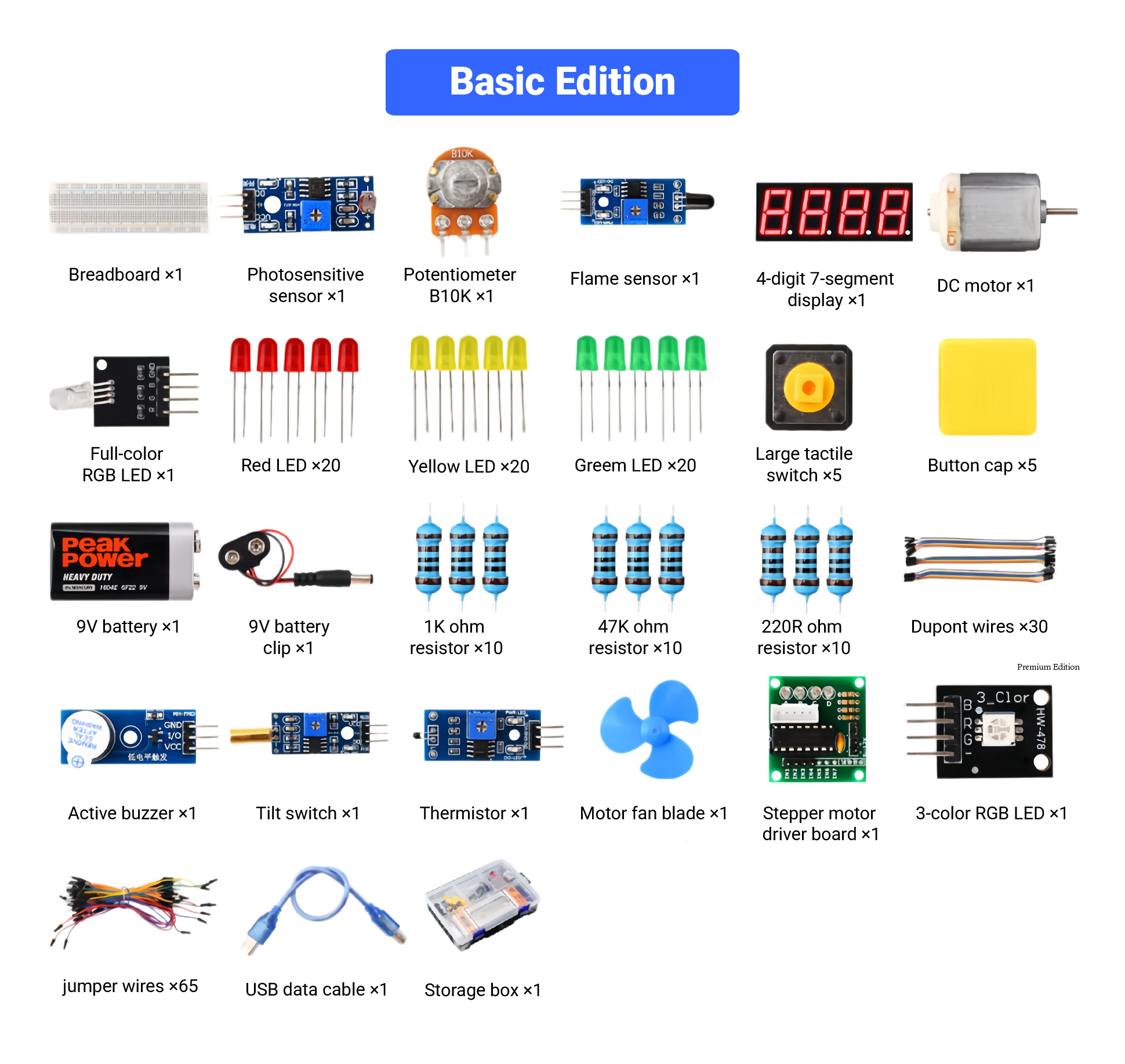
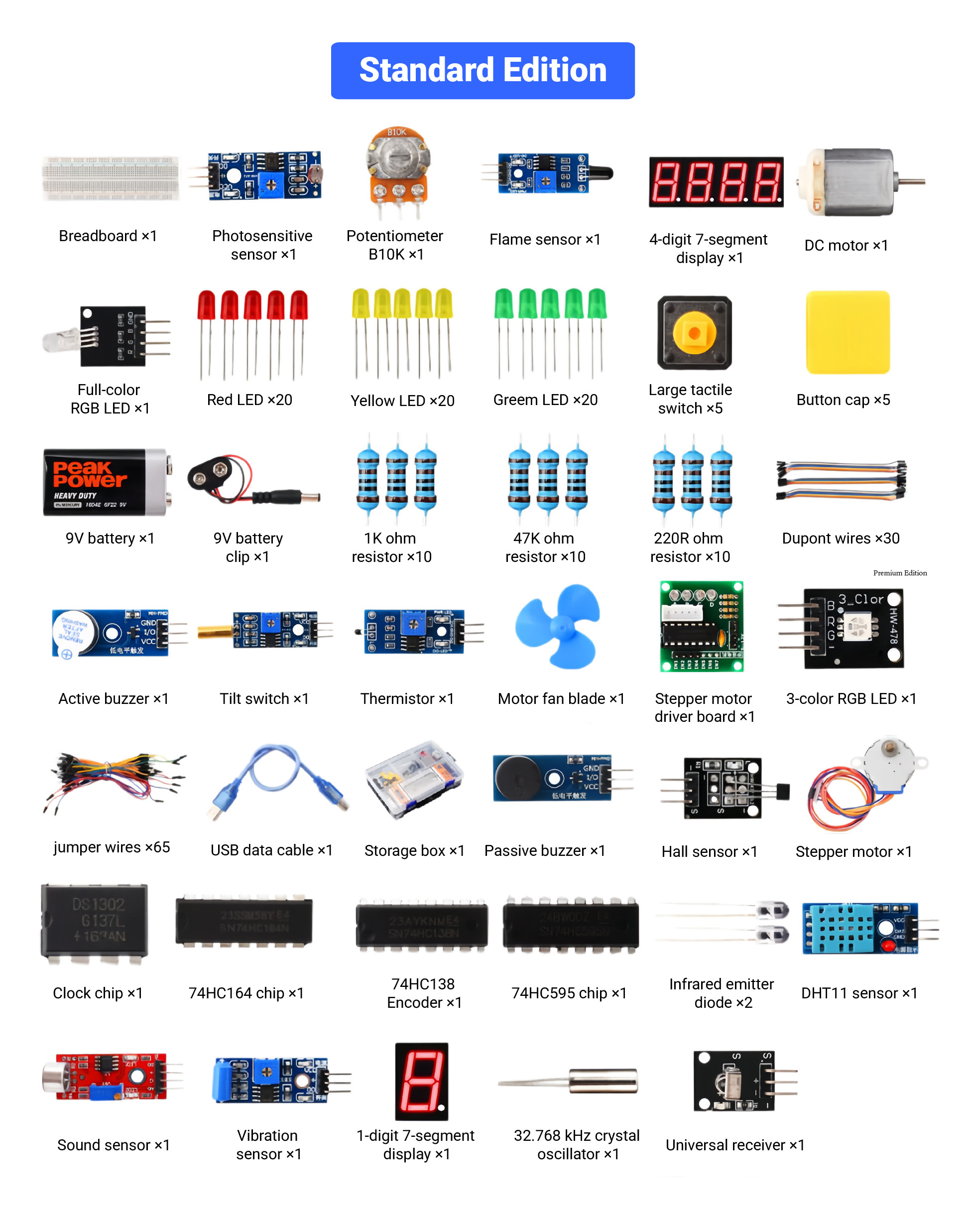
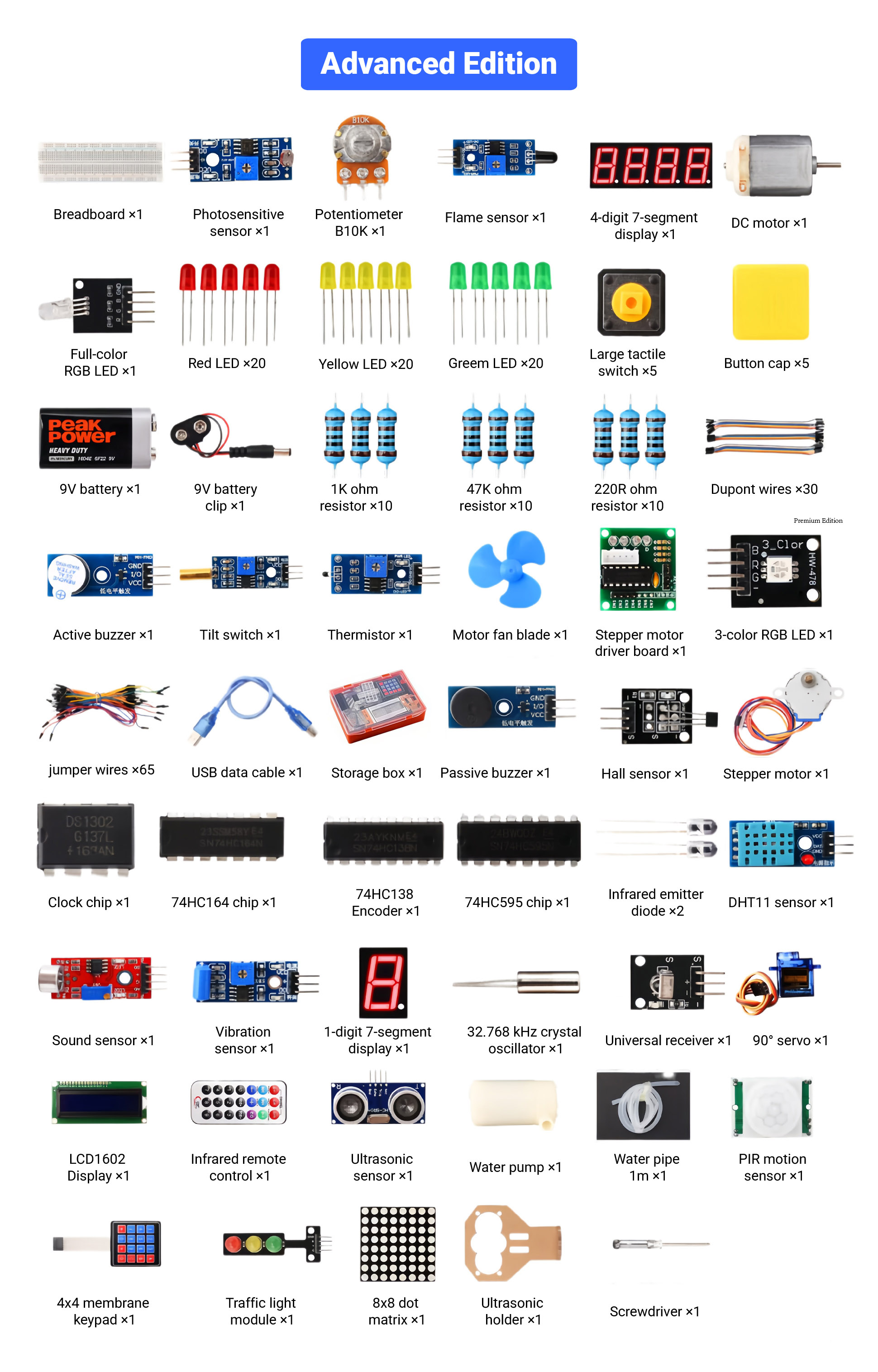
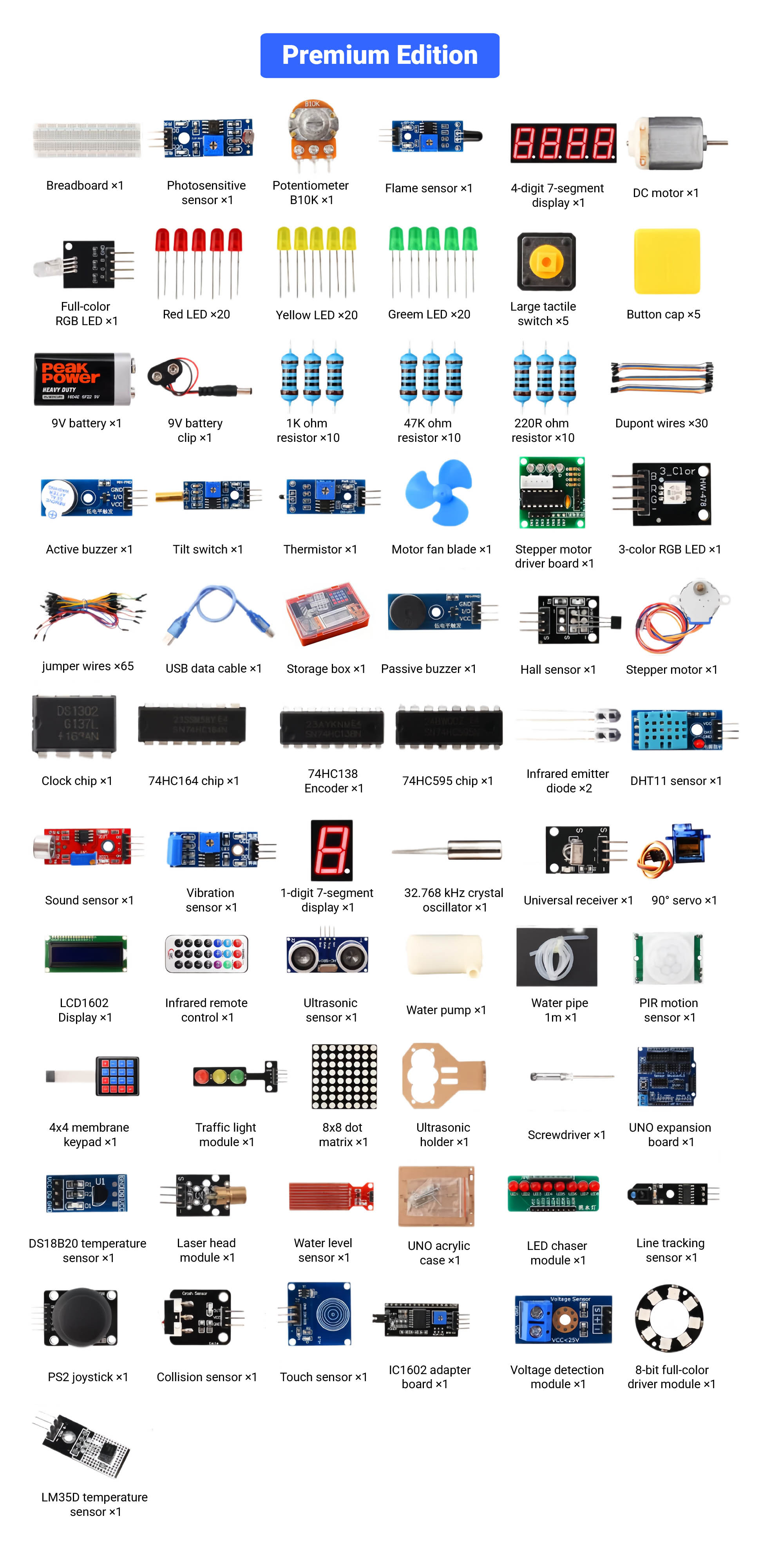
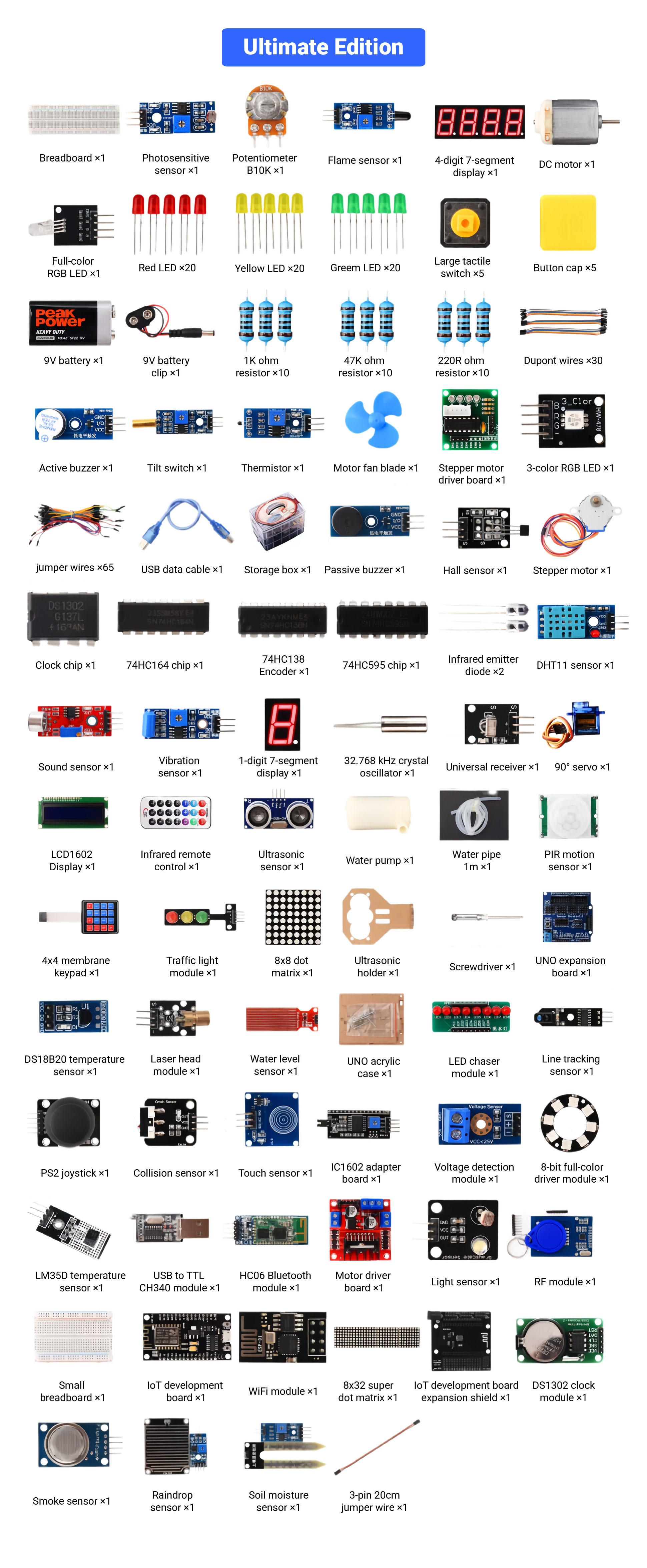
The levels scale according to project complexity: Basic is for learning simple circuits and LEDs; Standard introduces displays and motors; Advanced adds communication modules like Bluetooth and LCDs; Premium includes complex sensors and IoT components; and Ultimate offers a full robotics suite with servos, pumps, and RF modules.
Yes, the UNO R3 board included in all kits is fully compatible with the official Arduino IDE. You can program it seamlessly using Windows, macOS, or Linux platforms.
Most modern operating systems automatically detect and install drivers for the CH340 USB-to-serial chip. If driver installation is required for older operating systems, the driver is widely available and free to download online.
Yes, absolutely. The Basic and Standard kits are designed specifically for novices, providing an entry point to learn electrical circuits, sensor integration, and coding basics step-by-step.
Yes, these kits are perfect for educational purposes, school engineering projects, STEM learning curricula, and fast prototyping for DIY makers and electronics hobbyists.